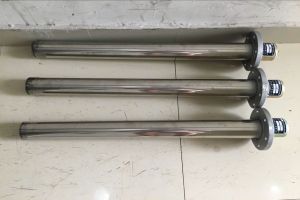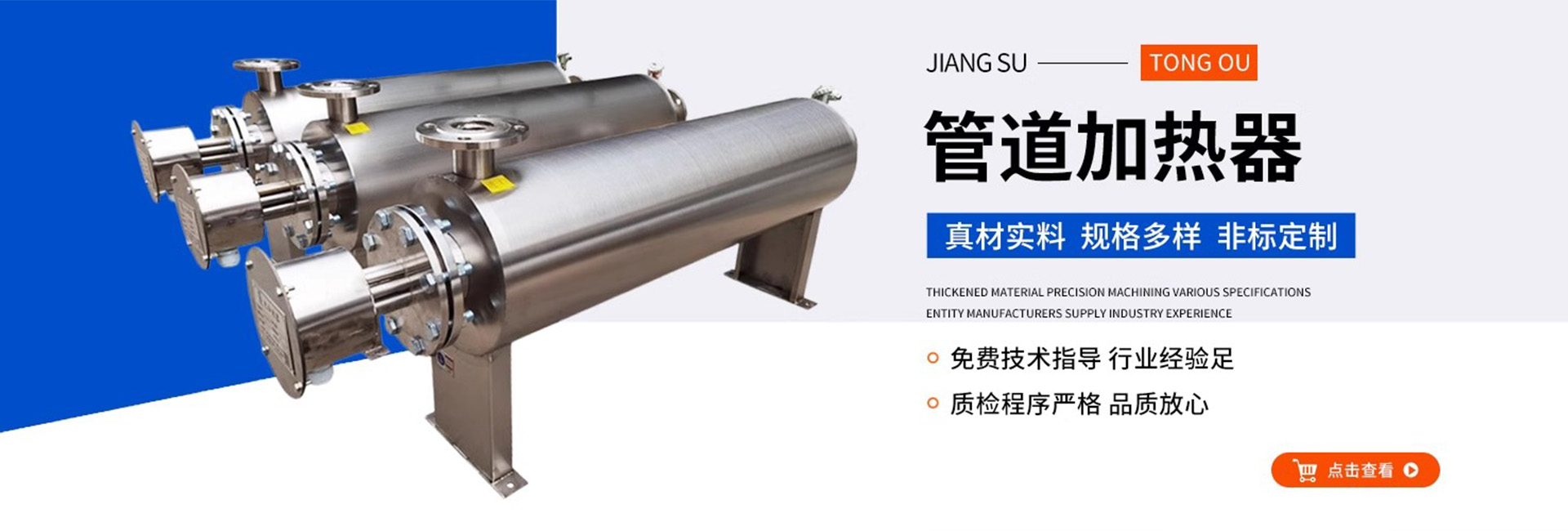

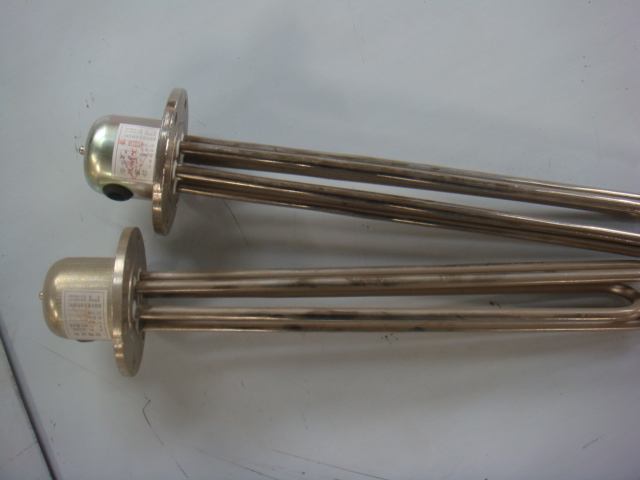
Armored Electric Heater
Armored/Sheathed Electric Heater, also known as sheathed electric heater or mineral insulated heating element (MI Heater), is a high-performance electric heating element that completely encloses the resistance heating wire core within a metal sheath, isolated by high-temperature inorganic insulating material. It borrows from the manufacturing technology of armored thermocouples, undergoing repeated drawing, reduction, and annealing to form a dense solid body, representing a significant advancement in electric heating element manufacturing technology. It is widely used in vacuum electric furnaces, experimental electric furnaces, large drying rooms, various tanks and vessels, and special occasions requiring localized high-temperature or point heating.
Working Principle
Armored electric heaters operate based on the Joule-Lenz law: current passing through the resistance wire core generates Joule heat, which is radially conducted through the high-thermal-conductivity insulating layer to the inner wall of the metal sheath, and then transferred from the outer surface of the metal sheath to the heated object through convection, radiation, or contact conduction.
The electrothermal conversion calculation formula is:
Q = 0.2388 · I²Rt or Q = 0.2388 · Pt
Where Q is heat (calories), I is current (A), R is resistance (Ω), t is time (s), and P is power (W).
Core Structure
Armored electric heaters adopt a "core wire-insulation-sheath" three-layer coaxial structure, from inside to outside:
Resistance heating wire core: located at the center of the tube, materials include nickel-chromium alloy (Cr20Ni80, temperature resistance ≤1000°C), iron-chromium-aluminum alloy (FeCr25Al5, temperature resistance ≤1200°C), molybdenum disilicide (MoSi₂), tungsten alloys, and other ultra-high-temperature alloys (temperature resistance up to above 2000°C)
High-temperature insulation layer: filled between the core wire and the sheath, materials include magnesium oxide (MgO), aluminum oxide (Al₂O₃), zirconium oxide (ZrO₂), yttrium oxide (Y₂O₃), etc., combining high insulation and high thermal conductivity
Metal sheath: serves as the outer shell, materials include stainless steel (304/316L), Incoloy 800/840, Inconel 600/625, titanium alloy, Hastelloy, copper, and copper-nickel alloys
Sealing structure: includes tube reduction sealing, resistance welding, argon arc welding, active metal brazing, and other forms
Main Types
According to product form, they can be divided into:
Table
Download as Table
Export as Image
Type Structural Features Typical Applications
Fixed-length rigid armored heating rod Diameter 3~20mm, non-bendable Reactor jacket, mold heating
Continuous flexible MI heating cable Diameter 1.0~6.0mm, arbitrarily bendable Pipe tracing, complex shape heating
Armored heating plate Flat expanded structure Wafer heating platen, vacuum chamber heating
Armored heating ring Ring structure Hot runner, injection molding machine barrel
According to different sheath materials, they can also be subdivided into:
Stainless steel sheath type: maximum withstand temperature up to 650°C, can meet high-temperature conditions and high power (up to 269W/m) requirements
Copper-nickel alloy sheath type: maximum withstand temperature up to 450°C, suitable for long-distance pipeline tracing
Copper sheath type: maximum withstand temperature up to 300°C, suitable for medium and low-temperature scenarios
Key Technical Parameters
Table
Download as Table
Export as Image
Parameter Typical Range
Operating voltage 55V / 110V / 220V / 380V
Operating temperature Not exceeding 500°C (conventional), high-temperature type can reach above 1500°C
Tube diameter range φ1mm ~ φ30mm
Length range 2 ~ 60 meters (flexible cable type)
Power density Tracing type 5~50W/m, heating rod type 50~500W/m, high power density scenarios can reach above 20W/cm²
Sheath material Stainless steel 304/316L/310S, Incoloy 800/840, titanium alloy, copper, copper-nickel alloy
Cold insulation resistance ≥300MΩ (conventional), can reach 1000MΩ
Pressure resistance Can withstand external pressure below 64MPa
Temperature control accuracy ±0.5°C ~ ±1°C
Service life 10,000 ~ 50,000 hours
Explosion-proof class ExdII CT4
Core Features
Compared with conventional tubular electric heating elements, armored electric heaters have the following significant advantages:
Slender shape: small diameter (φ1~6mm), long length (2~60 meters), compact structure
Good flexibility: can be bent arbitrarily like a cable, meeting uniform heating requirements in complex heating environments
High mechanical strength: armored dense solid structure, can withstand external pressure below 64MPa
Uniform heating: heating resistance wire is distributed linearly, minimal mechanical damage during processing, uniform deformation, uniform heat transfer, basically eliminating factors of uneven heating
Low internal pressure in the tube: repeated reduction and annealing compact the insulating magnesium oxide powder to maximum density with uniform distribution, minimizing residual gas in the tube, reducing internal pressure during heating
High insulation strength: high purity and density of magnesium oxide powder, resistance wire positioned at the center of the tube, uniform and reliable insulation distance, room temperature insulation can reach 1000MΩ, 20 times higher than conventional tubular electric heating elements
Fully sealed structure: outgassing rate can be controlled at <10⁻⁹ Torr·L/s·cm² level, meeting ultra-clean process requirements
Corrosion resistance: metal sheath can resist corrosion from various acids, alkalis, salts, and process gases
Typical Application Scenarios
Semiconductor and microelectronics manufacturing: vacuum CVD/PVD reaction chambers, lithography machine heating platen, post-ion-implantation annealing chambers, semiconductor wafer heating platen
Chemical and petrochemical: reactor jackets and coils, heating of high-viscosity fluids and corrosive media, pipe tracing
New energy and materials: lithium battery cathode material sintering furnace, carbon fiber/ceramic matrix composite high-temperature treatment, hydrogen energy electrolyzer preheating (60~90°C)
Medical and food: high-pressure steam sterilizers, tunnel food drying, aseptic packaging heat sealing
Scientific research and special environments: vacuum electric furnaces, experimental electric furnaces, space simulation chamber thermal loads, nuclear fusion experimental devices, high-temperature superconducting material heat treatment
Aerospace: engine component heating
Industrial molds: injection molding machine barrel and mold zone heating
Infrastructure: railway turnout snow melting, gutter snow and ice melting
Military and national defense: armored electric heaters for submarine nuclear power plant pressurizers (GJB 8792-2015)
Favorable Conditions for Stable Operation
The efficient, safe, and long-term operation of armored electric heaters requires meeting the following core conditions:
Precise matching of temperature and power: actual working temperature is recommended to be controlled within 80% of the product's rated temperature resistance, reserving a safety margin
Medium and environment adaptation: corrosive media require corrosion-resistant sheath materials such as 316L stainless steel or Hastelloy; humid environments require ensuring intact sealing; vacuum scenarios require laser-welded sealed products
Vibration environment adaptation: scenarios with vibration require reinforced armored structures and installation of anti-vibration clamps for fixation
Wiring specifications: keep away from strong electromagnetic interference sources, route separately through metal conduits with proper grounding and shielding, and ensure reliable grounding of the armored layer (grounding resistance ≤4Ω)
Stable power supply: input voltage fluctuation range should not exceed ±10% of rated voltage, equipped with overload protection and leakage protection devices
Precise control: recommended to pair with high-precision temperature control systems and PID adaptive control modules to achieve ±0.5°C precise temperature control
Implementation Standards
JB/T 12233-2015: Armored electric heaters (implemented on October 1, 2015)
JB/T 2379-1993: Metallic tubular electric heating elements
JB/T 4088-1999: Household tubular electric heating elements
GB 4706.1-1998: General safety requirements for household and similar electrical appliances
GJB 8792-2015: Specification for armored electric heaters for submarine nuclear power plant pressurizers