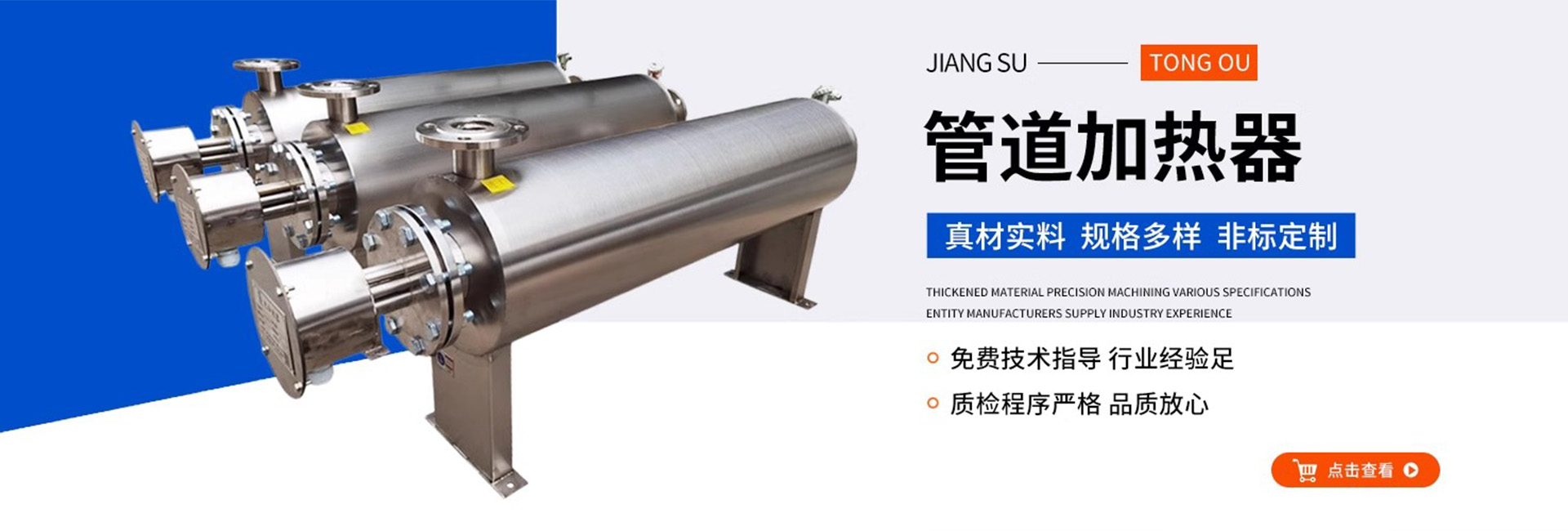

Sheathed electric heater
DataSheathed electric heater (Sheathed Heater / Metal-Clad Heater), also known as sheathed heater or mineral insulated heating element (MI Heater), is a high-performance electric heating element that completely encloses the resistance heating wire within a metal sheath, isolated from the sheath by high-temperature inorganic insulating materials. It draws on the manufacturing technology of sheathed thermocouples and represents a significant technological advancement in the field of electric heating elements.
Working Principle
Sheathed electric heaters operate based on the Joule heating effect: current passes through the central resistance wire to generate heat, which is radially conducted through the highly thermally conductive insulating layer (such as magnesium oxide powder) to the inner wall of the metal sheath, and then transferred from the outer surface of the sheath to the heated object through convection, radiation, or contact conduction.
The heat transfer path is: resistance wire heating → inorganic insulating layer conducting and insulating → metal sheath surface → heated medium
Structural Composition
Sheathed electric heaters adopt a classic "core wire – insulation – sheath" three-layer coaxial structure, from the inside out:
Heating core wire: located at the center, materials include nickel-chromium alloy (Cr20Ni80, suitable for ≤1000°C), iron-chromium-aluminum alloy (FeCr25Al5, suitable for ≤1200°C), molybdenum disilicide (MoSi₂), tungsten alloys, and other special alloys (suitable for 1200~1800°C)
High-temperature insulating layer: filled between the core wire and the sheath, commonly using high-purity magnesium oxide (MgO), aluminum oxide (Al₂O₃), zirconium oxide (ZrO₂), etc., combining high insulation (room temperature insulation resistance ≥100MΩ) and high thermal conductivity, with extremely high compaction density after repeated drawing, reduction, and annealing
Metal sheath: the outermost protective shell, materials include 304/316L stainless steel, Incoloy 800/840, Inconel 600/625, titanium alloy, Hastelloy, copper, and copper-nickel alloys
Sealing structure: sealed using tube reduction sealing, resistance welding, argon arc welding, or active metal brazing processes to ensure internal insulating materials are not affected by moisture
Main Types
Classification by product form:
Table
Download as table
Export as image
Type Features Typical Specifications
Fixed-length rigid sheathed heating rod Larger diameter, non-bendable, high mechanical strength Diameter φ3~20mm
Flexible MI heating cable Can be bent arbitrarily like a cable, adapting to complex paths Diameter φ1.0~6.0mm, length up to 60 meters
Precision-formed components Customized complex shapes such as spiral, U-shaped, ring-shaped, etc. Customized according to working conditions
Classification by application scenario:
Heat tracing type: power 5~50W/m, used for pipeline freeze protection and insulation
Heating rod type: power 50~500W/m, used for reactors, storage tanks, etc.
High power density type: power density up to 20W/cm² or more, used in precision scenarios such as semiconductor wafer heating plates
Core Features
Compared with conventional tubular electric heating elements, sheathed electric heaters have the following significant advantages:
Slender shape: small diameter (φ1~6mm), long length (2~60 meters), can penetrate narrow spaces
Good flexibility: flexible MI type can be bent arbitrarily like a cable, meeting uniformity requirements in complex heating environments
High mechanical strength: compact solid structure, can withstand external pressure below 64MPa
Uniform heating: resistance wire is distributed in a straight line, minimal mechanical damage during processing, basically eliminating factors causing uneven heating
Excellent insulation performance: magnesium oxide powder has extremely high compaction density after repeated reduction and annealing, room temperature insulation resistance can reach 1000MΩ, about 20 times higher than conventional tubular electric heating elements
High temperature resistance: continuous working temperature covers 300°C to over 2000°C, depending on core wire and sheath materials
Vacuum compatibility: fully sealed structure with outgassing rate controllable at <10⁻⁹ Torr·L/s·cm² level, meeting ultra-clean process requirements
Corrosion resistance: metal sheath can resist corrosion from various acids, alkalis, salts, and process gases
Long service life: design life can reach 10,000~50,000 hours
Main Application Fields
Semiconductor and microelectronics manufacturing: vacuum CVD/PVD reaction chambers, lithography machine heating plates, post-ion-implantation annealing chambers, ALD heater components
Petrochemical industry: reactor jackets and coils, heating of high-viscosity fluids and corrosive media, pipeline heat tracing
New energy and materials: lithium battery cathode material sintering furnaces, high-temperature treatment of carbon fiber/ceramic matrix composites, hydrogen energy electrolyzer preheating, solar thermal molten salt power generation
Medical and food: high-pressure steam sterilizers, tunnel-type food drying, aseptic packaging heat sealing
Scientific research and special environments: thermal loads in space simulation chambers, nuclear fusion experimental devices, heat treatment of high-temperature superconducting materials
Military and national defense: heating for submarine nuclear power plant pressurizers (according to GJB 8792-2015 military standard)
Infrastructure: railway switch snow melting, gutter snow and ice melting
Industrial molds: constant temperature control for injection molding machines and die-casting machines
📐 Key Technical Parameters
Table
Download as table
Export as image
Parameter Description
Working temperature range Copper sheath ≤300°C; stainless steel sheath ≤650°C; 825 alloy sheath ≤800°C; high-temperature type can reach 900~1500°C or more
Diameter range Flexible type φ1.0~6.0mm; rigid rod type φ3~20mm
Length range Flexible type up to 60 meters
Insulation resistance Room temperature ≥100MΩ, high temperature ≥10MΩ
Minimum bending radius Usually 6 times the element diameter
Pressure resistance Can withstand external pressure below 64MPa
Temperature control accuracy With PID control system, can reach ±0.5°C~±1°C
Clearly define the heating medium: clean water choose 304 stainless steel sheath (surface power density 5~10W/cm²); oil choose 304/316L (1~3W/cm²); corrosive media choose 316L/titanium alloy/Hastelloy
Determine temperature grade: select matching core wire and sheath materials based on working temperature; it is recommended to control actual working temperature within 80% of rated temperature resistance, leaving a safety margin
Choose product form: complex paths or uniform heating choose flexible MI cable; fixed installation choose rigid heating rod; special spaces choose custom-formed components
Confirm explosion-proof requirements: hazardous locations require special models with explosion-proof certification (such as Ex d ⅡC T4)
Match power supply and control: confirm voltage specifications (220V/380V), pair with high-precision temperature control systems and safety interlocks such as overheat protection and low liquid level protection
Related Executive Standards
JB/T 12233-2015 "Sheathed Electric Heaters" - core industry standard for sheathed electric heaters
JB/T 2379-2016 "Metal Tubular Electric Heating Elements" - general standard for tubular electric heating elements
GJB 8792-2015 "Specification for Sheathed Electric Heaters for Submarine Nuclear Power Plant Pressurizers" - military standard
GB 4706.1 "Safety General Requirements for Household and Similar Electrical Appliances"