
Sheathed Heater
Sheathed Heater (Sheathed Heater / Metal-Clad Heater), also known as armored heater, sheathed electric heater or tubular electric heater, is a high-performance electric heating element that completely encloses the resistance heating wire in a metal sheath and isolates it from the sheath through high-temperature inorganic insulating materials. Its implementation standard is JB/T 12233-2015 "Armored Electric Heaters".
Working Principle
The sheathed electric heater is based on the Joule-Lenz law, converting electrical energy into heat energy:
Q = 0.2388·I²Rt
When current passes through the central high-resistivity alloy heating wire, Joule heat is generated. The heat is radially conducted through the high-thermal-conductivity insulating layer (such as magnesium oxide powder) to the inner wall of the metal sheath, and then transferred from the outer surface of the sheath to the heated object through convection, radiation, or contact conduction. The entire heat transfer process has extremely low heat loss (≤5%), and the overall heat transfer efficiency can reach over 90%.
Structural Composition
The sheathed electric heater adopts a three-layer coaxial structure of "core wire - insulation - sheath", from the inside to the outside as follows:
Heating core wire: resistance heating element, materials include nickel-chromium alloy (NiCr), iron-chromium-aluminum alloy (FeCrAl), molybdenum disilicide (MoSi₂), tungsten alloy, etc.
Insulation layer: high-purity inorganic insulating materials such as magnesium oxide (MgO), aluminum oxide (Al₂O₃), zirconium oxide (ZrO₂), etc., densely filled under high pressure (density ≥95%), providing both electrical isolation and efficient heat conduction functions.
Metal sheath: stainless steel (304/316L), Incoloy 800/840, titanium alloy, Hastelloy, copper and copper-nickel alloy, etc., providing mechanical protection and environmental isolation.
Sealing structure forms include tube shrinking sealing, resistance welding, argon arc welding, active metal brazing, etc.
Main Classifications
Sheathed electric heaters can be divided into two major categories according to product form:
Table
Download as Table
Export as Image
Type Structural Features Diameter Range Length Range
Armored heating rod (rigid) Fixed-length formed, can be bent into U-shape, W-shape, spiral, etc. 3~20mm Customized according to design
Armored heating cable (flexible MI type) Can be continuously bent, flexible like a cable 1.0~6.0mm 2~60 meters
According to sheath material, it can also be subdivided into:
Table
Download as Table
Export as Image
Sheath Material Maximum Operating Temperature Typical Applications
Copper sheath ≤300℃ Building floor heating, pipeline heat tracing
Copper-nickel alloy sheath ≤450℃ Long-distance pipeline heat tracing
Stainless steel sheath (304/316L) ≤650℃ Chemical pipelines, reactor heating
Incoloy/Inconel alloy sheath Above ≤800℃ High-temperature industry, vacuum furnaces
Special alloy sheath Up to above 1500℃ Extreme environments such as semiconductors, nuclear energy
Core Performance Characteristics
Compared with conventional tubular electric heating elements, sheathed electric heaters have significant advantages:
Slender shape: small diameter (φ1~20mm), long length (up to 60 meters), suitable for installation environments with limited space
Good flexibility: can be bent into complex shapes such as spiral, U-shape, ring, etc., meeting the uniform heating requirements of complex heating environments
High mechanical strength: compact solid structure, can withstand external pressure below 64MPa, pressure-resistant and shock-resistant
Uniform heating: the heating wire is distributed in a straight line, with minimal mechanical damage during processing, basically eliminating factors causing uneven heating
High insulation strength: insulation resistance at room temperature can reach 1000MΩ, 20 times higher than conventional tubular electric heating elements
High-temperature corrosion resistance: fully enclosed structure, outgassing rate can be controlled at <10⁻⁹ Torr·L/s·cm² level, meeting ultra-clean process requirements
Vacuum compatibility: the metal sheath does not produce dust or gas, suitable for clean environments such as vacuum furnaces
Long service life: can reach 10,000~50,000 hours
Main Technical Parameters
Table
Download as Table
Export as Image
Item Parameter Range
Implementation standard JB/T 12233-2015
Operating temperature range 50℃~1500℃ (special types can reach above 2000℃)
Power density Heat tracing type 5~50W/m, heating rod type 50~500W/m, high power density scenarios can reach above 20W/cm²
Insulation resistance At room temperature ≥100MΩ (conventional type) / ≥1000MΩ (armored cable type)
Withstand voltage 1500V/1min without breakdown
Minimum bending radius About 6 times the element diameter
Explosion-proof grade Ex d IIC T4 (some models)
Temperature control accuracy ±0.5℃~±1℃ (with PID temperature control)
Service life 10,000~50,000 hours
Selection Key Points
When selecting, the following factors need to be comprehensively considered:
Heating medium: for clean water/soft water, choose 304 stainless steel sheath; for oil media, the power density needs to be controlled at 1~3W/cm² to prevent coking; for corrosive media, choose 316L or titanium alloy sheath
Temperature requirements: select the corresponding sheath material and core wire material grade according to the process temperature
Power calculation: comprehensively calculate based on the medium mass, specific heat capacity, target temperature rise, and heating time, following the principle of "sufficient but not redundant"
Installation method: choose straight tube, U-shape, W-shape, flange type, etc. according to the space; hydraulic oil tanks mostly use threaded type, while reactors prefer flange type
Environmental conditions: for vacuum environments, choose laser welding sealed type; for vibration environments, strengthen the armored structure and add anti-vibration fixtures
Power supply matching: input voltage fluctuation should not exceed ±10% of the rated value, and pay attention to three-phase load balance when multiple groups are connected in parallel
Usage Precautions
Strictly prohibit dry burning: for immersion heaters, ensure that the medium liquid level covers the heating area to prevent dry burning and burnout
Reliable grounding: the armored layer must be reliably grounded, with grounding resistance controlled within 4Ω
Moisture-proof sealing: do good insulation treatment on the wiring part to prevent moisture intrusion from causing insulation degradation
Voltage stability: power supply voltage fluctuation should not exceed ±10%, equipped with overload protection and leakage protection devices
Bending radius: the bending radius of flexible armored cables should not be less than 6 times the element diameter
Regular inspection: regularly check the insulation resistance. If the insulation is lower than the standard value after long-term storage, it needs to be restored by baking
Application Fields
Table
Download as Table
Export as Image
Field Typical Uses
Semiconductor and Microelectronics Vacuum CVD/PVD reaction chambers, lithography machine heating plates, post-ion-implantation annealing chambers
Petrochemical Reactor jackets and coils, heating of high-viscosity fluids and corrosive media, pipeline heat tracing
New Energy Lithium battery cathode material sintering furnaces, hydrogen energy electrolyzer preheating, photovoltaic cell production
Power Industry Nuclear power plant pressurizer heating, boiler pipeline heat tracing
Medical and Food High-pressure steam sterilizers, tunnel-type food drying, aseptic packaging heat sealing
Aerospace Engine component heating, space simulation chamber thermal loads
Scientific Research Vacuum electric furnaces, experimental electric furnaces, nuclear fusion experimental devices, high-temperature superconducting material heat treatment
Implementation Standards
Table
Download as Table
Export as Image
Standard Number Name
JB/T 12233-2015 Armored Electric Heaters (industry standard, implemented on October 1, 2015)
JB/T 2379-1993 Metal Tubular Electric Heating Elements
GJB 8792-2015 Specification for Armored Electric Heaters for Pressurizers of Submarine Nuclear Power Plants (military standard)
Relationship with Heating Products You Know Before
Among the several electric heating products you have already learned about, the sheathed electric heater is positioned as a universal core heating element, and it is the "basic component" of many heating products:
Table
Download as Table
Export as Image
Product Relationship with Sheathed Electric Heater
Heating cable (MI mineral insulated type) MI heating cable is essentially a flexible armored heating cable, which is a form of sheathed electric heater
Bolted electric heating rod The structure of the bolted heating rod (heating wire + magnesium oxide + stainless steel sleeve) is exactly the same as that of the sheathed electric heater, and it is its specialized application
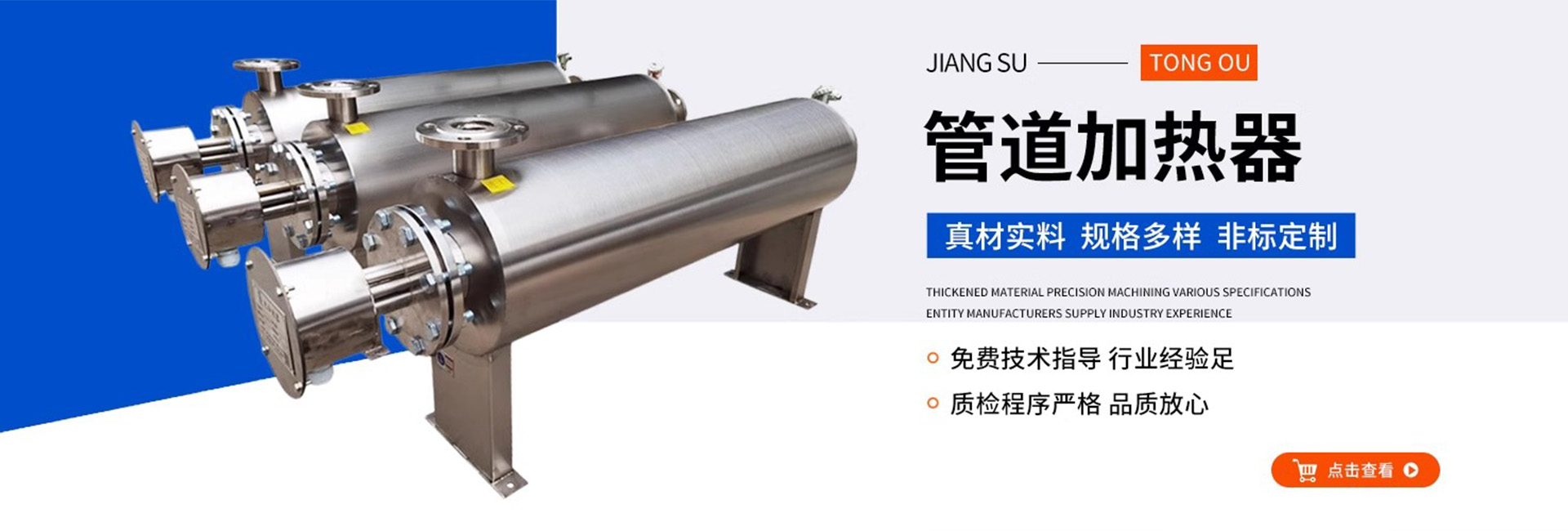
Pipeline heater The tubular electric heating element inside the pipeline heater is a typical application form of the sheathed electric heater
Heating coil/heating plate Some high-end heating coils and heating plates also use armored structures as the heating core internally
In simple terms, the sheathed electric heater is a general term for the three-layer coaxial structure of "core wire + insulation + sheath". It can be used directly as an independent product (such as vacuum furnace heating rods), or embedded as a core element in other heating equipment (such as pipeline heaters, heating coils, etc.). It is one of the most basic and universal element forms in the electric heating field.
It is worth mentioning that the bolted electric heating rod you asked about before, its structure (0Cr27Al7Mo2 heating wire + magnesium oxide insulation + 1Cr18Ni9Ti stainless steel sleeve) is exactly the typical structure of a sheathed electric heater, which can be understood as a specialized product of the sheathed electric heater in the field of bolted heating.