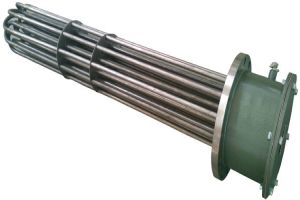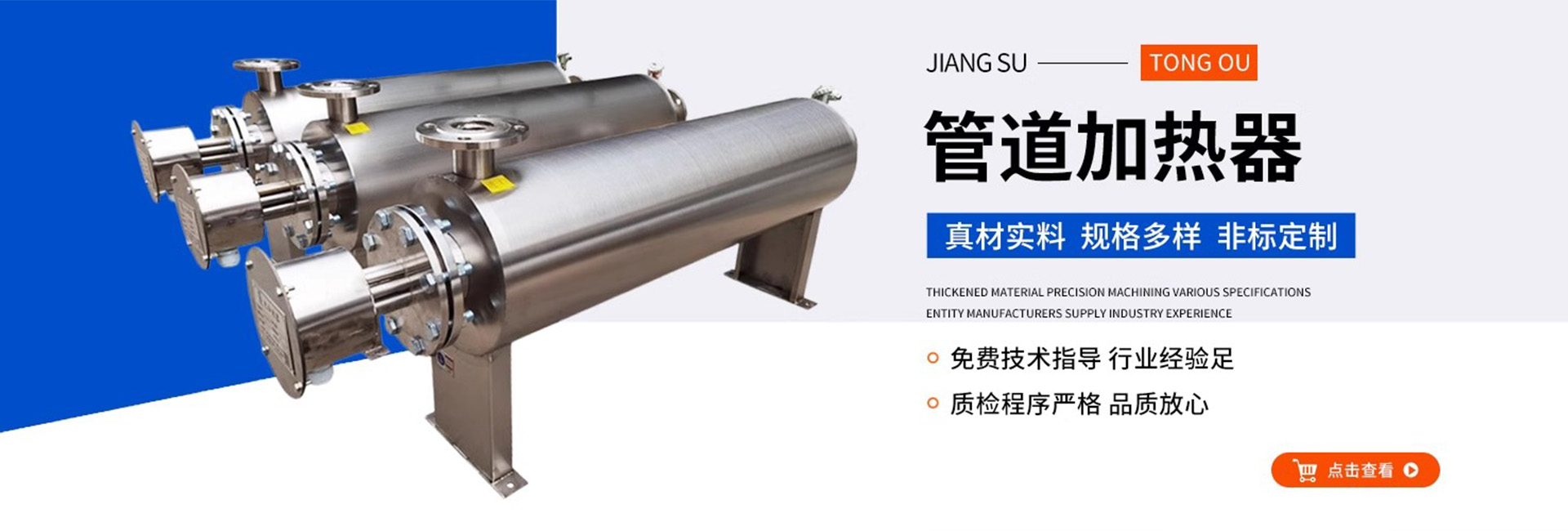

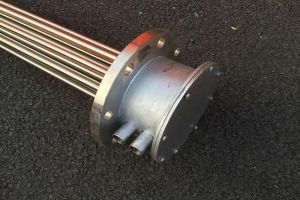
Sheathed electric heater
The "sheathed electric heater" you mentioned is commonly referred to in industry as a mineral-insulated (MI) electric heater or heating cable. It is an advanced form of tubular electric heater, borrowing the manufacturing technology of sheathed thermocouples, and through special processes, the heating core wire, insulating material, and metal sheath are tightly combined into a solid entity.
Core Structure and Working Principle
The sheathed electric heater adopts a precise "core wire-insulation-sheath" three-layer coaxial packaging structure:
Heating core wire: Usually made of nickel-chromium alloy or iron-chromium-aluminum alloy wire, which generates heat based on the Joule heating effect when energized.
Insulation layer: The heating wire is filled with high-purity, high-density inorganic insulating powder such as magnesium oxide (MgO) or aluminum oxide (Al₂O₃), which provides insulation and efficient thermal conductivity.
Metal sheath: The outermost layer is a metal tube made of stainless steel, copper-nickel alloy, etc., serving as a protective shell and heat transfer terminal.
During manufacturing, these materials undergo repeated drawing, diameter reduction, and annealing processes to form a compact solid structure. When energized, heat is rapidly conducted through the dense insulation layer to the metal sheath, and then released to the heated object.
Core Performance and Advantages
Compared to conventional tubular heaters, sheathed electric heaters have significant performance advantages:
Excellent flexibility: Like a cable, it can be bent arbitrarily, perfectly fitting complex-shaped surfaces to meet uniform heating needs in various irregular environments.
High mechanical strength: The compact solid structure gives it strong pressure resistance, vibration resistance, and impact resistance, and it can withstand high external pressure.
Uniform heating and precise temperature control: The internal heating wire is arranged in a straight line or uniformly spiraled, with short heat transfer distance, uniform surface temperature (deviation can be controlled within ±5°C or even lower), low thermal inertia, and extremely fast response.
High insulation and safety: Due to the highly compacted and uniformly distributed magnesium oxide powder, its insulation resistance at room temperature is much higher than that of conventional heaters, and the fully enclosed structure prevents oxidation of the core wire, providing excellent explosion-proof and fire-resistant performance.
Long service life: Under rated operating conditions, its service life typically exceeds 5000 hours, and some high-end products can even reach tens of thousands of hours.
Main Classifications and Application Scenarios
Based on form and customization level, they are mainly divided into two categories:
Sheath type (MI heating cable): At the factory, it is usually supplied as a continuous cable of hundreds of meters in length, which can be cut, bent, or wrapped as needed during use. Widely used in industrial pipeline heat tracing (such as anti-condensation and viscosity reduction), insulation of large containers/hoppers, and de-icing/anti-icing of aircraft wings/sensors in the aerospace field.
Custom type (sheathed heating plate/component): The shape and size are specially customized for specific equipment and cannot be changed after production. Commonly used in substrate heating for magnetron sputtering reaction chambers, vacuum electric furnaces, precision experimental equipment, and other fields with extremely high requirements for cleanliness and temperature uniformity.
Selection and Usage Recommendations
Material matching: Choose the sheath material based on working temperature and environment. For example, stainless steel is suitable for conventional medium and low temperatures, while high-temperature or strongly corrosive environments require high-temperature alloys (such as Inconel) or special alloys.
Installation specifications: For pipeline heat tracing, a wrapping method is usually adopted, and heat-resistant pressure-sensitive adhesive tape and aluminum foil tape are used for fixing to increase the heating area and ensure fit.
Environmental adaptation: Although sheathed heaters have strong protective properties, in high-vacuum or ultra-clean environments such as semiconductors, attention should still be paid to their outgassing rate and resistance to plasma bombardment, and models that have undergone special degassing treatment should be selected.