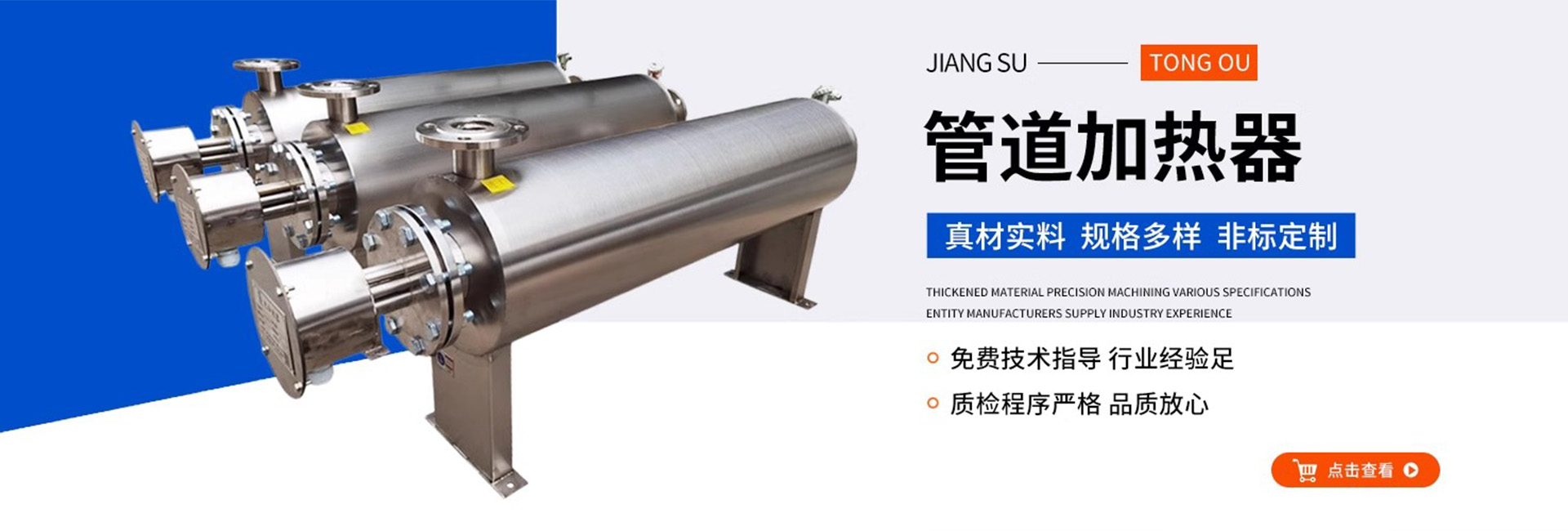

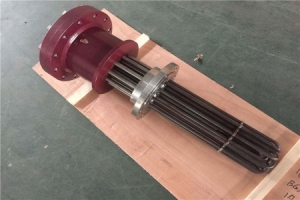
Sheathed Electric Heater
The "sheathed electric heater" you mentioned typically refers to a sheathed heater, also commonly known as a mineral insulated (MI) heating cable.
It is a significant technological advancement developed from traditional tubular electric heating elements. Its core lies in adopting a manufacturing process similar to that of sheathed thermocouples, where resistance heating wire, high-purity insulating powder (such as magnesium oxide), and a metal protective sheath are repeatedly drawn, reduced in diameter, and annealed to form a compact, robust, and inseparable entity. This three-layer coaxial structure of "core wire-insulation-sheath" endows it with comprehensive performance far exceeding that of conventional heating elements.
⚙️ Core Structure and Materials
The outstanding performance of sheathed electric heaters stems from their precise layered structure, with each layer playing a critical role:
Heating Element: The source of energy.
Nickel-chromium alloys (e.g., Cr20Ni80): Stable resistance, good oxidation resistance, and the mainstream choice for medium-to-high temperatures of 300-800°C.
Iron-chromium-aluminum alloys (e.g., 0Cr27Al7Mo2): Higher resistivity, temperature resistance up to 1300°C, suitable for strongly oxidizing environments, but prone to embrittlement at high temperatures.
Ultra-high-temperature alloys (e.g., MoSi₂): Temperature resistance exceeding 2000°C, specifically used in high-end scientific research and special metallurgy under vacuum or inert atmospheres.
Insulation Layer: The bridge between safety and heat transfer.
Magnesium oxide (MgO): High insulation strength, good thermal conductivity, moderate cost, and the most widely used insulating material.
Aluminum oxide (Al₂O₃): Higher temperature resistance (up to 1800°C), superior chemical stability, suitable for high-end applications such as vacuum environments.
Through high-pressure dense filling processes, the insulating powder tightly encapsulates the core wire, maximizing heat transfer efficiency and eliminating "hot spots" and insulation breakdown.
Metal Sheath: The robust protective and heat-transfer shell.
Stainless steel (304/316L): Suitable for medium-to-low temperatures and general corrosive environments.
High-temperature alloys (e.g., Inconel 600): Suitable for high temperatures of 800-1300°C, strong corrosion, and vibration environments; the preferred choice in fields such as semiconductors and optical coating.
Copper/copper-nickel alloys: Commonly used for pipe tracing, with relatively lower temperature resistance but good flexibility.
Core Performance Advantages
Compared with traditional heating elements, sheathed electric heaters achieve a "crushing" improvement across multiple dimensions:
Table
Download as Table
Export as Image
Performance Dimension Advantages of Sheathed Electric Heaters Comparison with Traditional Heating Elements
Flexibility and Installation Can be bent arbitrarily like a cable, perfectly fitting complex and irregular surfaces. Fixed shape, poor installation flexibility.
Mechanical Strength Compact solid structure, can withstand external pressure up to 64MPa, resistant to vibration and impact. Average mechanical strength, easily damaged by external forces.
Electrical Safety Insulation resistance at room temperature can reach 1000MΩ, 20 times that of conventional elements, with uniform and reliable insulation distance. Relatively lower insulation performance, easily affected by the environment.
Heating Uniformity Heating wire is linearly distributed, short heat transfer path, surface temperature difference can be controlled within ±5°C or even ±2°C. Prone to local overheating or uneven heating.
Environmental Adaptability Fully enclosed structure, corrosion-resistant, radiation-resistant, explosion-proof, can operate in harsh conditions such as high vacuum and strong corrosion. Easily eroded by the environment, short lifespan.
Service Life Under rated conditions, lifespan can reach 10,000-50,000 hours, 2-10 times that of traditional elements. Relatively short lifespan, high maintenance costs.
Main Types and Applications
Based on structure and purpose, sheathed electric heaters are mainly divided into two categories:
Continuous Length Type
Features: Delivered as a continuous cable of hundreds of meters; cut to length based on design resistance during use, installed by winding or coiling.
Applications: Heat tracing and insulation of pipes/ash hoppers, uniform heating of large containers/drying rooms, and spot heating of complex molds.
Custom Fabricated Type
Features: Custom-made for specific equipment; shape and resistance cannot be changed after production. The internal heating core can be coiled around ceramic or quartz skeletons to achieve higher power density.
Applications: Semiconductor manufacturing (magnetron sputtering substrate heating), aerospace (de-icing of onboard sensors, engine temperature measurement), high-end scientific research electric furnaces, vacuum heat treatment equipment.
Clarify operating conditions: Precisely provide key parameters such as maximum working temperature, required power, heating area/length, and environmental atmosphere (air/vacuum/corrosive).
Material matching: Scientifically select the combination of heating wire, insulating powder, and sheath material based on temperature and corrosive environment. For example, vacuum coating prefers Inconel sheath + Ni-Cr/Fe-Cr-Al heating wire.
Pay attention to certifications: Ensure the product complies with relevant national and industry standards such as JB/T 2379 "Metal Tubular Electric Heating Elements". For explosion-proof or high-vacuum environments, confirm corresponding special certifications.
Standard installation:
Use specialized tools when bending to avoid sharp folds or excessive bending that could damage the internal structure.
For pipe heat tracing, use heat-resistant pressure-sensitive tape or stainless steel straps for fixing, and may cover with aluminum foil tape to increase the heating area.
Ensure sufficient distance between the cold end (non-heating section) and the hot end, and that the cold end is in a safe temperature zone.