
Armored electric heat tracing cable 304 stainless steel mineral insulation
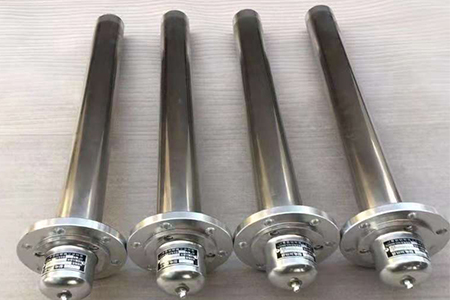
The "armored electric heat tracing cable 304 stainless steel mineral insulation" you mentioned is commonly known in industry as armored MI heating cable (Mineral Insulated Heating Cable). This is a high-end electric heat tracing product designed for harsh industrial environments.
The following is a technical analysis, performance advantages, and application scenarios of this product:
I. Core Structure and Working Principle
Armored MI heating cable is a solid body composed of a metal sheath, inorganic insulation material, and heating core wire. Its basic structure includes:
Heating core wire: Usually uses single or multiple nickel-chromium alloy heating wires as the heat source.
Insulation layer: Uses high-purity, high-temperature resistant fused crystalline magnesium oxide (MgO) as the thermally conductive insulator, ensuring excellent electrical insulation and thermal conductivity.
Metal sheath: The outer seamless continuous wrapping of stainless steel tube (such as 304, 316L, etc.) provides strong mechanical protection and corrosion resistance.
II. Core Performance Characteristics
Ultra-high temperature and high power resistance: The 304 stainless steel sheath series can meet the requirements of high-temperature conditions and high heating power (up to 269W/m), with a maximum withstand temperature of 600°C, and some special designs can even withstand steam purging above 800°C.
Ultimate safety:
Fire and explosion proof: All constituent materials are inorganic, non-combustible, and non-flammable, and the seamless metal sheath fundamentally prevents flammable gases and flames from entering.
Anti-permeation and anti-corrosion: The seamless sheath structure prevents liquids and gases from penetrating inside, effectively resisting external corrosion.
Ultra-long life and high stability: Since there is no organic insulation material, the cable does not have insulation aging issues, and its service life can reach decades.
Flexibility and installation convenience: It is softened before leaving the factory, has excellent flexibility, can be bent freely, and is convenient for laying in narrow spaces or on irregular equipment.
III. Main Application Fields
With its excellent high-temperature resistance, explosion-proof, and anti-corrosion performance, 304 stainless steel armored MI heating cable is widely used in the following fields:
Petrochemical and natural gas: Heating and insulation of internal and external crude oil pipelines, valves, devices, and oil tanks, as well as heat tracing of natural gas process pipelines.
Heavy industry and energy: Freeze protection of instrument pipelines in power plants, heat tracing of lime water/gypsum water pipelines in flue gas desulfurization projects, and insulation of high-temperature molten salt pipelines in nuclear facilities and solar thermal power stations.
Urban construction and buildings: Snow melting and de-icing for roads, bridges, tunnels, and airport runways, as well as anti-icing heating for roofs and eaves.
Other industries: Process temperature maintenance for chemical containers/tanks, anti-condensation on shipbuilding decks, and special fields such as aerospace.
IV. Selection and Installation Precautions
Accurate selection: The required power and length must be calculated based on actual working conditions (such as maintenance temperature, ambient temperature, pipe material, and length). Single cables cannot be cut arbitrarily and must be purchased in custom lengths.
Matching temperature control: During installation, it must be used with a temperature controller to prevent the working temperature from continuously rising and causing system burnout.
Installation specifications: Do not bend sharply or drag on the ground during laying; when encountering sharp edges, pad with aluminum foil tape or polish smooth to prevent scratching the outer layer; fix at bends and both sides of intermediate connectors.
Electrical testing: After installation, use a 500V megohmmeter to check insulation resistance, ensuring that the resistance between the core wire and ground/neutral wire is not less than 5MΩ before putting into use.