
Pipeline heater
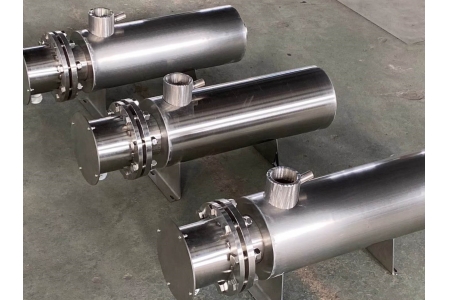
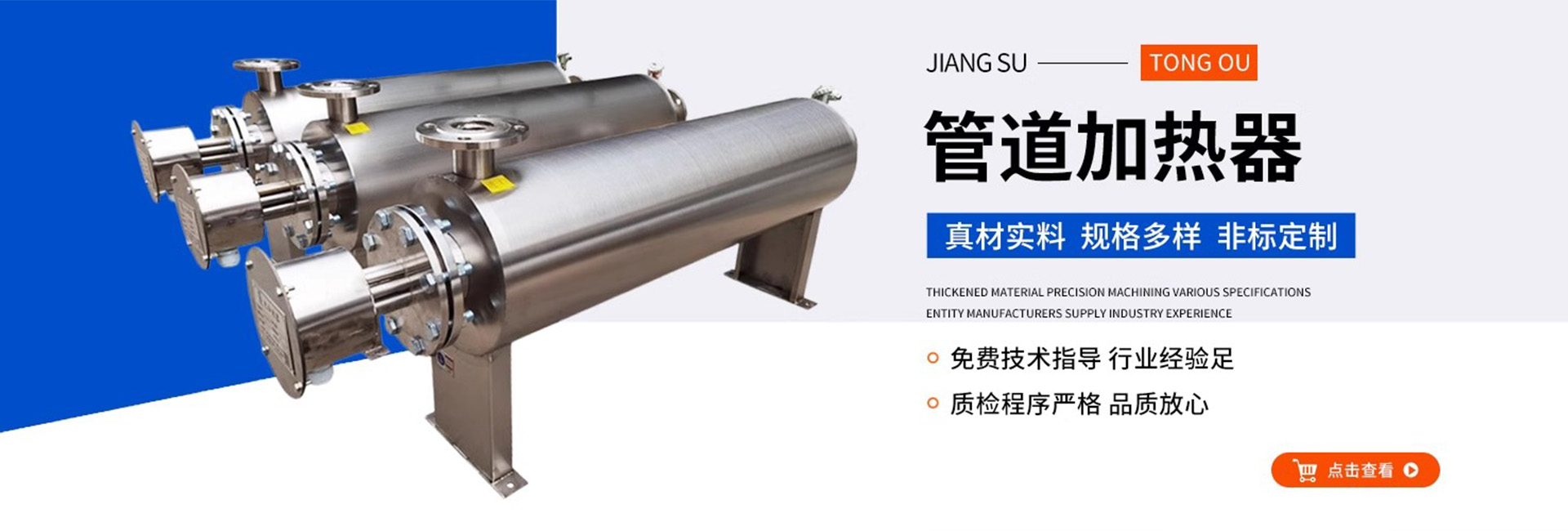
Pipeline heater (also known as electric pipeline heater, in-line heater, or sheathed tubular electric heater) is an electric heating device used for continuous heating of fluid media (gas or liquid) flowing through pipelines. It is installed in series in the process piping system. The medium flows through the internal heat exchange channels of the heater under pressure, is heated to the required process temperature, and then exits from the outlet, achieving "in-line heating."
The pipeline heater operates based on the Joule heating effect: when current passes through the internal high-resistance alloy heating wire (nickel-chromium alloy or iron-chromium-aluminum alloy), electrical energy is converted into thermal energy; the heat is conducted through the insulating and thermally conductive filler (crystalline magnesium oxide powder) to the metal sheath tube wall, and then transferred from the tube wall to the fluid medium flowing through the shell.
Its heating process can be divided into three stages:
Electrical energy conversion: The heating wire generates heat when energized, and the heat is rapidly conducted to the metal tube surface through the magnesium oxide powder.
Heat exchange: The low-temperature fluid enters the heater under pressure, flows along the specific flow channels guided by the baffles inside the shell, and fully absorbs the high-temperature thermal energy generated by the electric heating elements.
Temperature control: The temperature sensing element at the outlet monitors the temperature in real-time and feeds it back to the controller (microcontroller/PLC), which automatically adjusts the heating power to achieve constant temperature output; in case of overtemperature, the independent overheat protection device immediately cuts off the power supply.
Table
Download as table
Export as image
Component Function Description
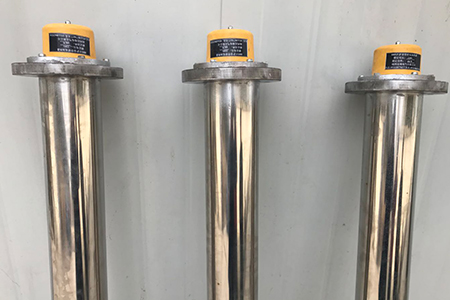
Tubular electric heating element Core heating element, with high-temperature resistance wire sealed inside a metal tube, filled with crystalline magnesium oxide powder as insulating and thermally conductive medium
Shell/heating vessel Pressure-bearing shell, with internal flow guide baffles to direct the medium to flow evenly through the heating area
Baffle plate Optimizes the medium flow path, ensuring uniform heating and avoiding local overheating or dead zones
Temperature control unit Composed of microcontroller/PLC and temperature sensor, achieving PID intelligent closed-loop temperature control
Overheat protection device Independent of the main control system, immediately cuts off power when the heating element overheats, preventing medium coking or carbonization
Safety valve Prevents system overpressure operation
Insulation layer Reduces heat loss, improves thermal efficiency, and lowers the outer surface temperature of the shell
Modern pipeline heaters have evolved into a multi-level safety system integrating mechanical protection, electrical protection, and system linkage protection.
Table
Download as table
Export as image
Parameter Typical Range
Power range 2kW ~ 6000kW
Gas heating temperature 0 ~ 1050℃
Liquid heating temperature 0 ~ 350℃ (some designs up to 850℃)
Standard pressure rating 1.0 ~ 8MPa (high-pressure custom up to 10~20MPa)
Gas processing capacity Up to 55000m³/h
Liquid flow rate Up to 120m³/h
Surface load of heating tube 1.2 ~ 3.8W/cm²
Temperature control accuracy ≤±0.8℃ ~ ±1℃
Thermal efficiency ≥98% (electrothermal conversion efficiency)
Explosion-proof rating Up to Ex db IIC T1~T6 Gb
Protection rating Standard IP54, explosion-proof and anti-corrosion type IP65
Response speed 5~10 minutes to reach set temperature
Gas pipeline heater: Heats air, nitrogen, argon, ammonia, etc., with fast heating rate up to 10℃/s, suitable for drying, hot air circulation, process gas preheating, etc.
Liquid pipeline heater: Heats water, oil, thermal oil, chemical solutions, etc. Design must consider the specific heat capacity and fluidity of the liquid, suitable for process fluid preheating, heat preservation, viscosity reduction, etc.
By heating method
Direct heater: Heating elements are directly immersed in the medium, with high heat transfer efficiency, suitable for non-flammable and non-explosive liquids
Indirect heater: Heat is transferred to the medium through an intermediary (water, steam, air, etc.), and the heating elements are not in direct contact with the medium, offering high safety, suitable for food, pharmaceutical, chemical, and other industries
By heating principle
Resistance wire type: Nickel-chromium/iron-chromium-aluminum alloy wire generates heat, mature and traditional, with wide applicable temperature range
PTC ceramic type: Positive temperature coefficient self-limiting temperature, achieving separation of liquid and electricity, extremely high safety, thermal efficiency up to 98%, service life over 30,000 hours
Other special types
Electromagnetic induction heater, steam pipeline heater, solar pipeline heater, heat pump pipeline heater, etc.
Download as table
Export as image
Application field Typical media Main function
Petrochemical Heavy oil, lubricating oil, diesel, asphalt, thermal oil Preheating to reduce viscosity for easy transportation and combustion
Power and metallurgy Raw water, process water, superheated steam in power plants Production heat supply, heating systems
Chemical Chemical materials, molten salt, water gas Reaction feed heating, powder drying
Food and pharmaceutical Dairy products, pharmaceutical solutions Sterilization and transportation, constant temperature treatment
HVAC Water, air Hot water circulation in high-rise buildings, air conditioning heating
New energy Thermal oil, battery slurry Solar pipeline anti-freezing, lithium battery temperature control
Marine auxiliary Fuel oil, lubricating oil Engine room preheating, pipeline insulation
Medium type confirmation: Clearly identify the heating medium (gas/liquid/specific chemical name), as different media have different requirements for material, power density, and surface temperature
Temperature and flow matching: Calculate the required heating power based on inlet temperature, target outlet temperature, and medium flow rate
Pressure rating: Select the corresponding pressure rating according to the system working pressure; high-pressure conditions require customization
Material selection: For corrosive media, choose stainless steel 304/316L; for high-temperature gases, choose high-temperature alloys such as Alloy 600
Explosion-proof requirements: In flammable and explosive environments, explosion-proof types (Ex db IIC T4/T6 Gb) must be selected and certified with explosion-proof certificates
Temperature control accuracy: Choose the temperature control method according to process requirements; precision processes require PID closed-loop temperature control
Installation method: Confirm pipeline interface dimensions, inlet/outlet direction, installation space, supporting flange connection or welding
Strictly prohibit dry heating: Only turn on the heater when the medium flows continuously through it; if the medium is interrupted, power must be cut off immediately
Regularly check overheat protection: Ensure the independent overheat protection device functions properly; this is the last line of defense against heating element burnout
Monitor outlet temperature: Use an independent thermometer to verify temperature control accuracy; do not rely solely on the device's built-in display
Explosion-proof sites: Must use explosion-proof products; confirm there is no explosive gas at the site before maintenance operations
Regular cleaning: Liquid heaters need regular cleaning of internal scale to prevent local overheating and efficiency reduction caused by scaling
Insulation layer maintenance: Check the integrity of the insulation layer; repair promptly if damaged to avoid heat loss and risk of shell burns
JBT2379-93: Production and testing standard for pipeline electric heaters
GB 3836 series: Explosion-proof certification standards for explosion-proof pipeline heaters
GB/T 34663-2017: General technical requirements for resistance heaters used in explosive gas atmospheres