
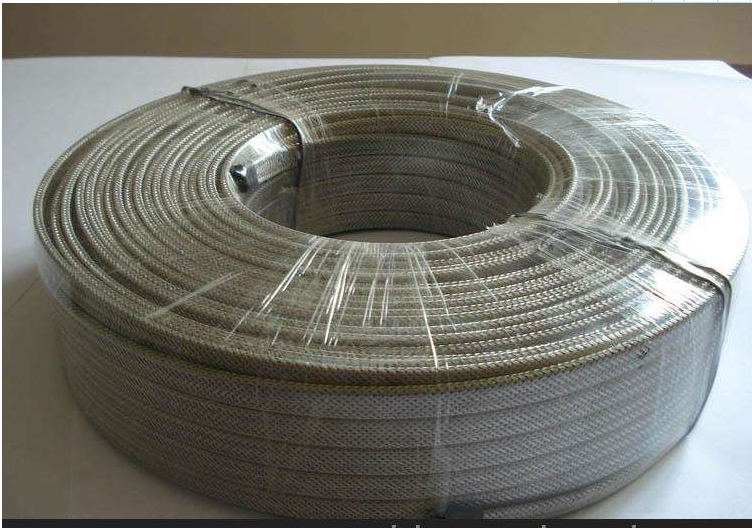
Industrial electric heat tracing cable 220V fire protection equipment electric heat tracing pipe anti-freezing high-temperature heating armored heat tracing cable
The keywords you entered cover the most core types of electric heat tracing products in the field of industrial pipeline anti-freezing and thermal insulation. Combined with the application scenarios you mentioned such as "220V", "fire protection facilities", "pipeline anti-freezing", and "armored", I have systematically sorted out the core technical differences, selection logic, and application specifications of these types of electric heat tracing cables for you:
1. Special for fire protection pipeline anti-freezing: Self-limiting electric heat tracing cable
For the anti-freezing of fire hydrants, fire protection pipelines, and underground garage sprinkler systems, the first choice is the fire protection special self-limiting electric heat tracing cable.
Core principle: It uses conductive plastic with positive temperature coefficient (PTC) characteristics, which can automatically adjust the output power according to the ambient temperature. When the temperature is low, the heat output is large; when the temperature is high, the heat output automatically decreases. No external temperature control equipment is needed, and cross-overlapping installation is allowed, with absolutely no concern about local overheating and fire.
Fire protection selection: Usually, low-temperature flame-retardant type is selected, with a maximum maintenance temperature of around 65°C. According to environmental requirements, it is divided into basic type (ZR-DWL-J), reinforced type (ZR-DWL-F), shielded type (ZR-DWL-P), and explosion-proof and anti-corrosion type (ZR-DWL-PF).
Voltage and length: Conventionally, 220V single-phase power supply is used, and the maximum usable length of a single root is usually within 100 meters.
2. Conventional industrial anti-freezing and thermal insulation: Constant power electric heat tracing cable
For long-distance, large-diameter industrial pipeline anti-freezing, constant power (parallel) electric heat tracing cable is usually selected.
Core principle: Internally, parallel insulated copper wires are used as busbars, and the heating wire achieves constant power output through a continuous parallel resistance structure.
Application characteristics: The output power is not affected by ambient temperature, and the heating is uniform. Under 220V voltage, the single-phase usable length can reach more than 140 meters. If 380V three-phase power supply is used, the usable length can reach 300 meters or even longer, which is very suitable for long-distance transmission pipelines.
Safety specifications: Constant power heat tracing cables are strictly prohibited from cross-overlapping, and must be used with a temperature controller to prevent the medium temperature from getting out of control.
3. "Heavy armor" for harsh environments: Armored heating cable (MI cable)
Regarding the "armored heat tracing cable" you mentioned, that is, mineral insulated (MI) heating cable, which is the highest-level product in the industrial heat tracing field.
Core structure: It is composed of metal conductors (nickel-chromium alloy), high-purity magnesium oxide insulation layer, and seamless metal sheath (stainless steel, etc.), with no organic materials inside.
Extreme performance: It has extremely strong high-temperature resistance (long-term operation can reach above 600°C), fire resistance, explosion-proof, anti-corrosion, and mechanical damage resistance. Under correct installation, the service life can reach more than 30 years.
Application scenarios: Specially used for high-temperature insulation pipelines in petrochemical plants, corrosive medium transportation in fine chemical industry, LNG stations, and high-risk areas with flammable and explosive materials such as hydrogen energy.
4. 220V power supply and installation specifications
Voltage matching: Conventional anti-freezing in industry and civil use generally adopts 220V single-phase power supply; for ultra-long pipelines or large industrial projects that need to balance grid load, 380V three-phase power supply can be selected.
Installation taboos: Self-limiting heat tracing cables can be cut arbitrarily and cross-overlapped; but constant power heat tracing cables and armored MI cables are absolutely prohibited from cross-overlapping, otherwise it will cause heat accumulation, burn out the cable, and even cause fire.
Safety protection: All electric heat tracing systems must be equipped with leakage protection switches, the shielding layer must be reliably grounded (grounding resistance ≤4Ω), and the tail end must be strictly sealed and moisture-proof using a dedicated tail end junction box or heat shrink tubing.
💡 Further assistance
The selection of industrial electric heat tracing systems is directly related to anti-freezing effect and fire safety. May I ask what your specific needs are at present:
Working condition selection: Do you need me to help you judge whether to choose self-limiting, constant power, or MI armored cable based on the specific pipeline medium (such as fire water, chemical oil), pipe diameter, and the local extreme minimum temperature?
Power and length calculation: Do you need to calculate the required power per meter (W/m) and the maximum laying length of a single circuit under 220V power supply for a specific pipe diameter and insulation layer thickness?
Explosion-proof and flame-retardant qualifications: Do you need to sort out the core test reports (such as explosion-proof certificate, fire-retardant report) that must be requested from the manufacturer when purchasing fire protection or chemical explosion-proof heat tracing cables, as well as the acceptance standards?