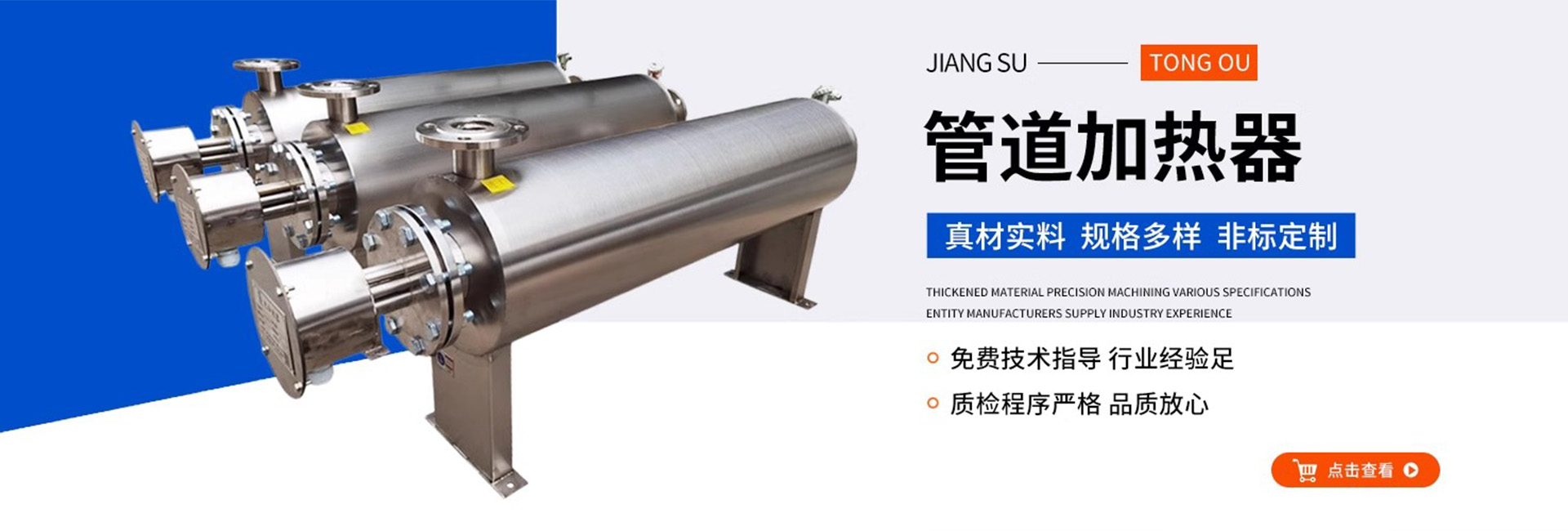

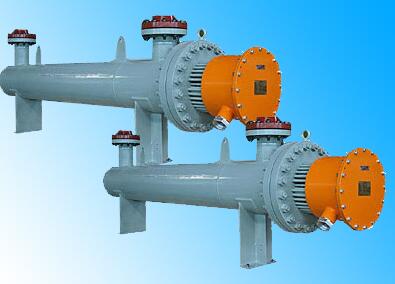
Pipeline heaters are the "main force" in the field of industrial fluid heating, primarily used for inline heating of gas or liquid media flowing through pipelines. They are widely used in industries such as petrochemicals, power and energy, new energy (e.g., lithium batteries, photovoltaics), environmental treatment, and food and pharmaceuticals. They are an efficient and energy-saving solution that replaces traditional steam heating and thermal oil heating.
Based on your daily focus on the selection and procurement of industrial electric heating equipment, the following outlines their core principles, selection pitfall avoidance guide, and procurement recommendations for surrounding manufacturers.
Core Structure and Working Principle
Pipeline heaters mainly consist of five parts: the cylinder body, multiple tubular electric heating elements, guide plates, insulation layer, and temperature control system.
Working principle: Based on the Joule heating effect, a low-temperature fluid medium enters the cylinder under pressure and flows along a specific flow channel. The internal electric heating elements generate heat when energized, and the heat is directly transferred to the medium through the metal tube wall. The guide plates inside the cylinder force the medium to fully contact the heating surface, avoiding short-circuiting or flow bias, and ensuring uniform heating.
Temperature control system: A thermocouple or PT100 temperature sensing element is installed at the outlet to monitor temperature in real time and feed it back to the PID controller. The controller automatically adjusts the heating power according to the preset temperature (e.g., via an SSR solid-state relay), achieving precise temperature control of ±1°C or even ±0.1°C, and is equipped with multiple protections such as over-temperature and flow interruption.
Key Parameters Guide for Selection
During industrial procurement and selection, it is recommended to focus on confirming the following five dimensions of parameters to match actual working conditions:
Clarify the heating medium and material (determines corrosion resistance and service life)
Clean water/HVAC circulating water: 304 stainless steel cylinder is recommended, with conventional corrosion resistance and high-temperature resistance, and high cost-effectiveness.
Food/pharmaceutical clean conditions: Sanitary-grade 316L stainless steel must be used, with mirror polishing and no dead corners, complying with GMP standards, and preventing material deterioration and residue.
Corrosive liquids (acid/alkali/seawater): 316L stainless steel or titanium alloy tube bodies are recommended; strongly corrosive conditions require special anti-corrosion coatings.
High-viscosity media (heavy oil/asphalt/thermal oil): Anti-coking spiral heating tubes must be selected, and the surface power density must be strictly controlled at ≤0.7W/cm² to prevent local overheating and carbonization.
Gases (air/nitrogen/hydrogen): The flow guide structure needs to be optimized, and the surface load can be slightly higher (1.2-3.8W/cm²). Explosion-proof models must be selected for flammable and explosive gases.
Power calculation and margin correction (determines heating effect)
Liquid power formula: P(kW) = [medium mass flow rate(kg/h) × specific heat capacity(kJ/(kg·°C)) × temperature difference(°C)] ÷ 3600 ÷ thermal efficiency (generally 0.9-0.95).
Gas power formula: P(kW) = [air volume flow rate(m³/h) × density(1.2kg/m³) × specific heat capacity at constant pressure(1.005kJ/(kg·°C)) × temperature difference(°C)] ÷ 3600 ÷ thermal efficiency (generally 0.8-0.9).
Margin correction: Reserve 10% margin for conventional intermittent operation; reserve 20% for 24-hour continuous operation; increase by 30%-50% for severe cold regions in the north or outdoor exposed pipelines.
Working condition temperature and pressure (determines pressure resistance grade)
Temperature range: Liquid media generally 0-350°C (some designs can reach up to 850°C), gas media 0-1050°C.
Pressure grade: Standard pressure-bearing 1.0-8MPa, high-pressure customization can reach 10-20MPa. It is necessary to confirm the cylinder wall thickness and flange sealing grade to avoid the risk of tube bursting.
Explosion-proof and safety configuration (determines applicability in high-risk scenarios)
Explosion-proof grade: For flammable and explosive working conditions such as chemicals and oil and gas, an overall explosion-proof structure must be selected. The explosion-proof grade must reach Ex d IIB T4 or Ex d IIC T1-T6 Gb, and an explosion-proof certificate must be requested.
Multiple protections: Safety devices such as flow interruption protection (to prevent dry burning), over-temperature protection, overload protection, and leakage interlock must be equipped.
Insulation and energy-saving design (determines long-term operating cost)
Require the manufacturer to provide a thickened high-density insulation layer (such as aluminum silicate or rock wool) to ensure the outer shell temperature is ≤50°C and thermal efficiency is ≥95%. Long-term operation can save more than 20% energy.
Common Models and Reference to Surrounding Manufacturers
Common pipeline heater models on the market include the GHY series, GHL-A series, vertical/horizontal pipeline electric heaters, etc. Different models correspond to different dimensions, voltages, and power specifications.
In terms of procurement channels, Jiangsu and surrounding areas have concentrated a large number of electric heating equipment manufacturers. In addition to related electrical enterprises in Yangzhou (such as Yangzhou Huaneng Electric Heating Technology, etc.), surrounding areas such as Yancheng (such as Yancheng Shuanghong Electric Heating, Yancheng Xuanyuan Heating Equipment, Yancheng Chuangshiyuan Electric Heating, etc.), Zhenjiang (such as Zhenjiang Dongfang Electric Heating, Zhenjiang Lifan Explosion-proof Electrical Appliances, Zhenjiang Sanwei Electric Heater, etc.), and Wuxi (such as Wuxi Hengxin Electric Heating, Wuxi Dayang Hi-Tech, etc.) also have many source manufacturers with non-standard customization capabilities. It is recommended that during actual procurement, directly provide the manufacturer with the specific medium type, flow rate, inlet and outlet temperatures, working pressure, and explosion-proof requirements, and require them to issue detailed selection drawings and power calculation sheets to ensure long-term stable operation of the equipment.