
Tubular Electric Heater
A tubular electric heater (also known as a metal tubular heating element, electric heating tube, or heating tube; in English: Tubular Heater / Sheathed Heating Element) is the most fundamental and widely used form of heating element in the electric heating field. It uses a metal tube as the outer shell, with a spiral resistance heating wire inside, and the gaps are tightly filled with crystalline magnesium oxide powder. Through a tube-shrinking process, it efficiently converts electrical energy into thermal energy. Its current industry standard is JB/T 2379-2016 "Metal Tubular Heating Elements" (replacing the previous JB/T 2379-1993 version).
Working Principle
The tubular electric heater operates based on the Joule heating effect: when current passes through the spiral resistance wire inside the tube, heat is generated. This heat is conducted through the insulating and thermally conductive medium (crystalline magnesium oxide powder) to the surface of the metal tube shell, and then heats the external medium (air, liquid, or metal mold) through conduction, radiation, or convection.
Structural Composition
The tubular electric heater adopts a three-layer coaxial structure of "heating wire - insulation layer - metal sheath," from the inside out, as follows:
Resistance heating wire: Spirally wound at the center of the tube, made of nickel-chromium alloy wire (Ni-Cr, temperature resistance up to 1400°C) or iron-chromium-aluminum alloy wire (Fe-Cr-Al, temperature resistance up to 1200°C)
Insulating filler: Crystalline magnesium oxide powder (MgO), which combines high-temperature resistance (above 1000°C), high insulation (breakdown voltage ≥500V), and high thermal conductivity (thermal conductivity ≥3.5W/m·K). After the tube-shrinking process, it is compacted to a density of over 3.3g/cm³, ensuring the heating wire is centered and does not touch the wall
Metal sheath tube: The tube diameter is typically φ6~φ30mm, and the material can be selected from In800, In840, 304, 316L, 310S stainless steel, aluminum, copper, low-carbon steel, titanium tube, etc., according to usage requirements
Sealing material: Both ends of the tube are sealed with silicone, ceramic adhesive, or silicone rubber to prevent moisture ingress
Lead-out rod/terminal: Connects the heating wire to the external power supply, made of copper or stainless steel, with a nickel-plated surface to prevent oxidation (Note: When the element surface temperature exceeds 450°C, brass lead-out rods are prohibited to prevent zinc volatilization)
Insulator: Used to fix and insulate the lead-out rods
Main Classifications
By Shape
Table
Download as Table
Export as Image
Type Structural Features Typical Applications
Straight Single-End Heating Tube Single-end lead-out, plug-in installation Mold heating, plastic machinery
Straight Double-End Heating Tube Double-end lead-out, through installation Water tank, oil tank heating
U-Shaped Heating Tube Bent into U shape to increase heating area Water heaters, boilers
W-Shaped Heating Tube Multiple bends, compact and efficient Large-capacity container heating
Custom-Shaped Heating Tube Bent into custom shapes based on working conditions Special equipment
Spiral Heating Tube Coiled into a spiral shape Pipeline heat tracing, reactors
Fin-Type Heating Tube Fins added to the outer surface to expand heat dissipation area Air heating, ovens
By Lead-Out Method
Table
Download as Table
Export as Image
Type Code Features
Double-End Lead-Out Standard Type Type A Most common, one lead-out rod at each end
Single-End Parallel Lead-Out Type C Two lead-out rods led out in parallel from the same end
Single-End Coaxial Lead-Out Type D Coaxial structure, compact installation
Embedded Element — Embedded inside the heated body
Core Performance Features
Simple structure: Three-layer coaxial structure, mature manufacturing process
High mechanical strength: Compact solid structure after tube shrinking, pressure and vibration resistant
High thermal efficiency: Electrical-to-thermal conversion efficiency can reach over 95%
Uniform heating: Heating wire is evenly distributed, and the tube surface temperature consistency is good
Safe and reliable: Surface is not electrified, high insulation resistance
Long service life: Design life generally exceeds 10,000 hours, with a maximum working temperature of up to 850°C
Easy installation: Supports various installation methods such as threaded connection, flange connection, and fastener installation
Main Technical Parameters
Table
Download as Table
Export as Image
Item Parameter Range
Executive Standard JB/T 2379-2016
Tube Diameter Range φ3mm~φ30mm
Working Voltage 12V / 24V / 36V / 48V / 110V / 220V / 380V
Maximum Working Temperature 850°C
Single-End Heating Tube Power 50W~4000W
Water Heater Heating Tube Power 2kW~12kW
Surface Load (Water Heating) 6~8W/cm²
Surface Load (Oil Heating) 2~4W/cm²
Surface Load (Corrosive Liquids) 3~5W/cm²
Surface Load (Static Air) 1~3W/cm²
Design Service Life ≥10,000 hours
Selection Key Points
When selecting, the following factors need to be comprehensively considered:
Heating medium: For clean water/drinking water, 304 stainless steel or copper tubes are recommended; for oil/heat transfer oil, 304/321 stainless steel is recommended; for corrosive liquids, 316L stainless steel or titanium alloy is recommended
Surface load: Choose an appropriate surface power density based on the medium type and flow state. Too high a load will shorten the lifespan or even cause burnout
Working temperature: Choose the corresponding sheath material and magnesium oxide powder grade based on the process temperature (low-temperature type below 400°C, medium-temperature type 400~600°C, high-temperature type 600~850°C)
Shape structure: Choose straight, U-shaped, W-shaped, fin-type, etc., based on installation space and heating area requirements
Voltage specification: Choose the corresponding voltage level based on the power supply conditions
Installation method: Threaded connection, flange connection, or fastener installation
Usage Precautions
No dry burning: The effective heating zone of an immersion heating tube must be fully immersed in the heated liquid or solid metal. Static dry burning in air will quickly burn it out
Reliable grounding: Wiring must be secure and effectively grounded
Regular descaling: When water quality is hard, scale on the tube surface must be cleaned regularly to maintain heat exchange efficiency
Anti-corrosion selection: In strongly corrosive environments, corrosion-resistant materials or coatings must be selected
Regular inspection: Regularly check insulation resistance and appearance condition
Moisture-proof sealing: The tube end sealing must be intact to prevent moisture ingress that could reduce insulation
Application Fields
Table
Download as Table
Export as Image
Field Typical Uses
Home Appliances Water heaters, ovens, coffee makers, electric kettles
Petrochemical Reactor heating, oil tank heating, pipeline heat tracing
Plastic Machinery Injection molding machine barrel heating, mold heating
Food Processing Fryers, sterilization equipment, drying equipment
Energy and Power Boiler auxiliary heating, steam generators
Aerospace Special heating applications
Nuclear Industry Heating in high-temperature and high-pressure environments (double protective tube explosion-proof type)
Executive Standards
Table
Download as Table
Export as Image
Standard Number Name Status
JB/T 2379-2016 Metal Tubular Heating Elements (Industrial) Current, replaces JB/T 2379-1993
GB/T 23150-2024 Tubular Heaters for Water Heaters Current, implemented on April 1, 2025
NB/T 10309-2019 Anti-corrosion Metal Tubular Heating Elements Current, implemented on May 1, 2020
GB/T 8623-1988 Metal Tubular Far-Infrared Radiation Heaters Current
JB/T 4088 Series Household Tubular Heating Elements Current
Relationship with Heating Products You Have Learned About Before
Among the several electric heating products you have already learned about, the tubular electric heater is positioned as the most basic universal heating element. It is the "parent" of many heating products:
Table
Download as Table
Export as Image
Product Relationship with Tubular Electric Heater
Sheathed Electric Heater A sheathed electric heater is a precision, high-performance version of the tubular electric heater. The structure and principle are exactly the same (heating wire + magnesium oxide + metal sheath), but the sheathed type has higher material grades, process precision, and performance indicators
In-Line Heater The heating core inside an in-line heater is a tubular electric heating element, which is a system-integrated application of the tubular electric heater
Bolt Electric Heating Rod The structure of a bolt heating rod is completely consistent with that of a tubular electric heater, and it is a specialized product in the field of bolt heating
Heating Coil/Heating Plate Some heating coils and heating plates also use tubular electric heating elements as the heating core
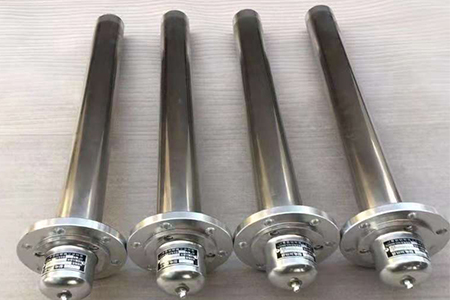
Immersion Heater An immersion heater is essentially a combination product of a tubular electric heater plus installation components such as flanges
In simple terms, the tubular electric heater is the most classic and universal basic element in the electric heating field. Almost all other tubular heating products can be traced back to this basic structure. It is like the "standard part" of the electric heating field. Through different shape bending, material selection, and system integration, it has derived various specialized heating products you have learned about before.