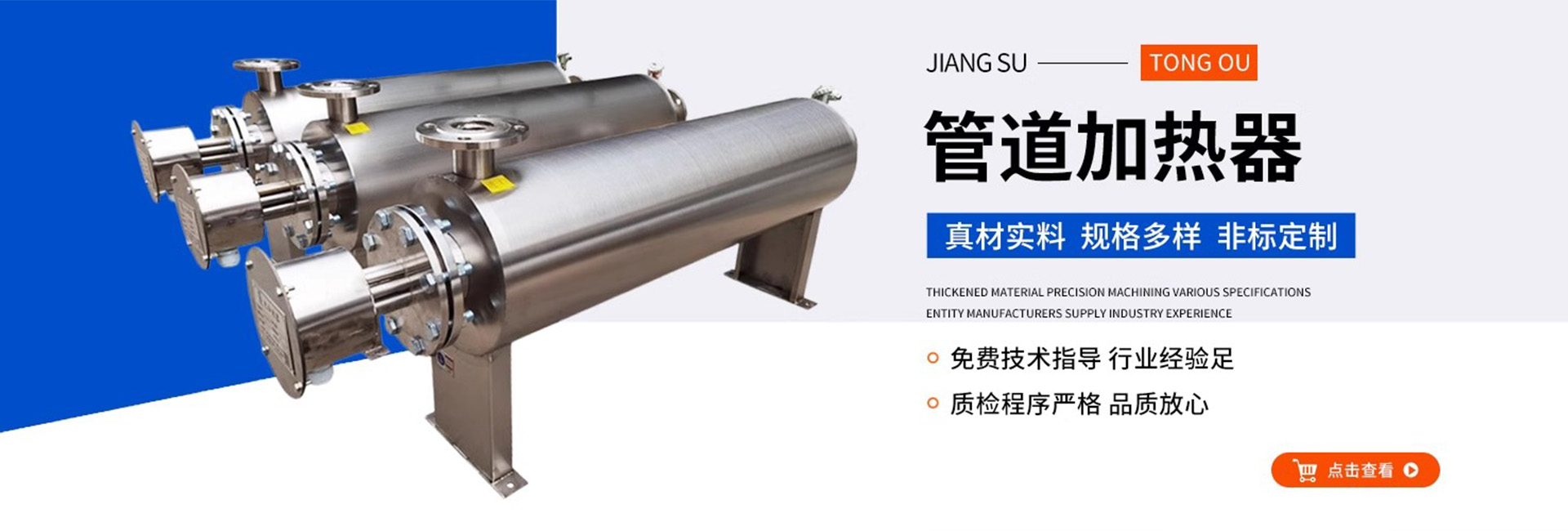

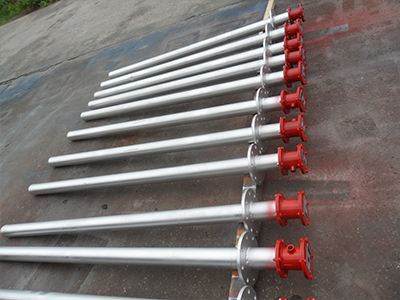
Armored Electric Heater, also known as sheathed electric heater, is a high-performance electric heating element in which a resistive heating core wire is completely enclosed within a metal sheath and isolated from the sheath by high-temperature inorganic insulating material. It draws on armored thermocouple manufacturing technology and achieves a major technical upgrade over conventional tubular heating elements. It is widely used in vacuum furnaces, experimental furnaces, large drying rooms, various tanks and vessels, and for localized high-temperature heating or spot heating in special applications.
Based on the Joule-Lenz law, current passing through the internal resistive heating core wire generates Joule heat. The heat is conducted radially through the high-thermal-conductivity insulating layer to the inner wall of the metal sheath, and then transferred from the outer surface of the sheath to the object being heated through convection, radiation, or contact conduction.
Electric-to-heat conversion formula:
Q = 0.2388 · I²Rt (unit: cal)
Where I is current (A), R is resistance (Ω), and t is time (s).
🔩 Core Structure
The armored electric heater adopts a three-layer coaxial structure of "core wire–insulation–sheath," from inside to outside as follows:
Component Material/Specification Function
Resistive heating core wire Nickel-chromium alloy (NiCr, ≤1000℃), iron-chromium-aluminum alloy (FeCrAl, ≤1200℃), molybdenum disilicide (MoSi₂), tungsten alloy, etc. Electrical energy → thermal energy conversion
High-temperature insulating layer Magnesium oxide (MgO), aluminum oxide (Al₂O₃), zirconium oxide (ZrO₂), etc., compacted density ≥95% Electrical insulation + high-efficiency thermal conduction
Metal sheath Stainless steel (304/316L), Incoloy 800/840, Inconel 600/625, titanium alloy, Hastelloy, copper and copper-nickel alloys, etc. Mechanical protection, corrosion resistance, heat-transfer shell
Sealing structure forms include tube reduction sealing, resistance welding, argon arc welding, active metal brazing, etc.
Type Diameter Range Length Features
Fixed-length rigid armored heating rod φ3~20mm Fixed length Sturdy structure, suitable for fixed installation in molds, reactors, etc.
Continuous flexible MI heating cable φ1.0~6.0mm 2~60m Can be bent arbitrarily like a cable, suitable for complex pipelines and long-distance heat tracing
Precision formed parts Customized on demand Customized on demand Complex shapes such as spiral, U-shaped, and ring-shaped to meet special working conditions
Diameter φ1~20mm
Length 2~60m (flexible cable type)
Continuous working temperature 300℃~2000℃ and above (depending on core wire and sheath material)
Power density Heat tracing type 5~50W/m; heating rod type 50~500W/m; high power density scenarios can reach above 20W/cm²
Insulation resistance ≥1000MΩ at room temperature; ≥10MΩ at high temperature
Minimum bending radius Approximately 6× element diameter
Pressure resistance Can withstand external pressure below 64MPa
Outgassing rate <10⁻⁹ Torr·L/s·cm² (meets ultra-clean process requirements)
Service life 10,000~50,000 hours
Electric-to-heat conversion efficiency ≥90%
Core advantages compared with conventional tubular heating elements
Slim shape and good flexibility: minimum diameter φ1mm, length up to 60m, can be bent arbitrarily like a cable, meeting the uniform heating requirements of complex heating environments
Uniform heating: the heating resistance wire is distributed in a straight line, with little mechanical damage during processing and uniform deformation, basically eliminating factors causing uneven heating
Extremely high insulation strength: magnesium oxide powder has high purity and high density, and the resistance wire is positioned at the center of the sleeve. Room-temperature insulation can reach 1000MΩ, about 20 times higher than conventional tubular heating elements
Low internal pressure: repeated diameter reduction and annealing maximize the compacted density of the insulating magnesium oxide powder and minimize residual gas inside the tube, reducing the internal pressure of the sleeve during heating
Good vacuum compatibility: the fully enclosed structure has an extremely low outgassing rate and can be used directly in vacuum environments without in-furnace wiring, eliminating discharge risks
High mechanical strength: tightly armored solid structure, pressure-resistant, shock-resistant, and corrosion-resistant
Semiconductor and microelectronics manufacturing
Vacuum CVD/PVD reaction chamber heating, lithography machine heating plates, post-ion implantation annealing chambers, semiconductor wafer heating plates, ALD heater components
Petrochemical industry
Reactor jacket and coil heating, heating of high-viscosity fluids and corrosive media, pipeline heat tracing and freeze protection
New energy and materials
Lithium battery cathode material sintering furnaces, high-temperature treatment of carbon fiber/ceramic matrix composites, hydrogen energy electrolyzer preheating, photovoltaic cell production
Concentrated solar power
High-temperature molten salt constant-temperature transportation heating, compatible with Incoloy 800 armored core, explosion-proof ICT4 certification, ±1℃ temperature uniformity
Medical and food
High-pressure steam sterilizers, tunnel food drying, aseptic packaging heat sealing
Scientific research and special environments
Space simulation chamber thermal loads, nuclear fusion experimental devices, high-temperature superconducting material heat treatment, vacuum furnaces, experimental furnaces
Military and nuclear energy
Submarine nuclear power plant pressurizer heating (GJB 8792-2015 standard)
Infrastructure
Railway turnout snow melting, building pipeline freeze protection and insulation
JB/T 12233-2015 Armored Electric Heater Core industry standard, implemented on October 1, 2015
JB/T 2379-1993 Metal tubular heating elements Basic standard for tubular heating elements
JB/T 4088-1999 Daily-use tubular heating elements Standard for daily-use and similar purposes elements
GB 4706.1-1998 General requirements for safety of household and similar electrical appliances General safety standard
GJB 8792-2015 Specification for armored electric heaters for submarine nuclear power plant pressurizers Military standard
Accurate matching of temperature and power: actual working temperature is recommended to be controlled within 80% of the product's rated temperature resistance, reserving a safety margin to avoid high-temperature accelerated aging of components
Sheath material adapted to medium: choose 304 stainless steel for ordinary environments; choose 316L/Hastelloy/titanium alloy for corrosive media; choose Incoloy 800/840 for high-temperature dry burning; copper sheath type temperature resistance ≤300℃, stainless steel sheath ≤650℃, 825 alloy sheath ≤800℃
Bending radius limit: the minimum bending radius is about 6 times the element diameter; excessive bending will damage the internal structure
Power supply stability: input voltage fluctuation range should not exceed ±10% of rated voltage; equipped with overload protection and leakage protection devices
Grounding requirements: the armor layer must be reliably grounded, and grounding resistance should be controlled within 4Ω
Vibration environment: in scenarios with vibration, choose products with reinforced armored structures and install shock-absorbing clamps for fixation
Avoid excessive bending: although flexible MI heating cables can be bent, the minimum bending radius requirement must be observed; repeated bending at the same position will cause core wire breakage
Moisture-proof treatment: insulation resistance decreases after moisture absorption, and drying treatment is required before use
Regularly test insulation resistance: when cold-state insulation resistance is lower than the standard value, it should be taken out of service for maintenance
Use with temperature control system: it is recommended to pair with a high-precision temperature control system and PID adaptive control module to achieve precise temperature control
Reinforcement in vibration environments: long-term vibration may cause sheath fracture or core wire detachment, so shock-absorbing clamps need to be installed