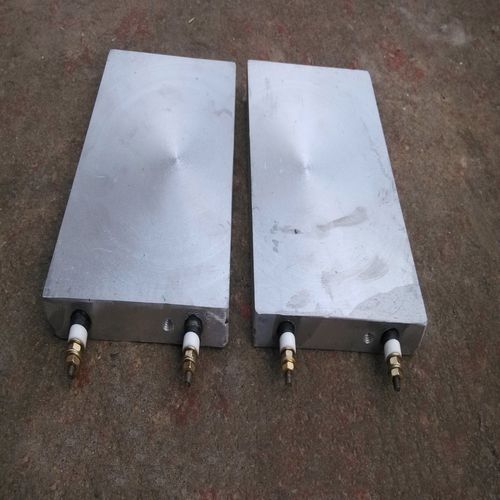

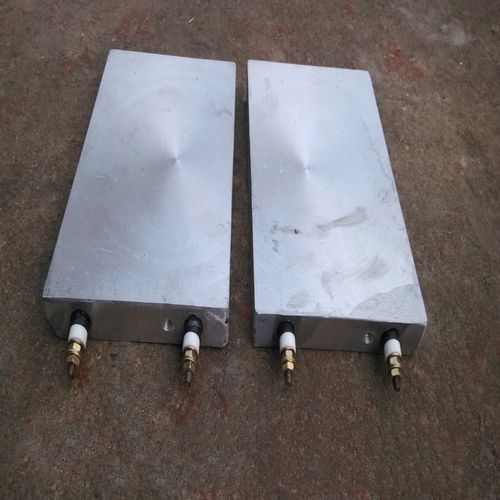
Electric Heating Plate
An electric heating plate is a device that efficiently converts electrical energy into thermal energy, with its core principle being resistance heating (Joule effect). When current passes through the internal resistance wire or heating element, the generated heat is uniformly transferred to a metal or ceramic panel through insulating and thermally conductive materials, thereby heating objects in contact.
Main Types and Applications
Electric heating plates are mainly classified into the following categories based on structure, material, and purpose:
1. Industrial and Household Heating Plates
These heating plates typically serve as internal heating components in equipment, with diverse forms and high customizability.
Stainless Steel Mica Heating Plate: Uses a mica plate as the insulating framework, wound with resistance wire, and covered with a stainless steel plate. It features a compact structure, high temperature resistance up to 500-600°C, and high mechanical strength. Widely used in household appliances such as rice cookers, irons, and microwave ovens, as well as industrial scenarios like plastic machinery and mold heating.
Ceramic Heating Plate: Made by embedding heating wires into ceramic materials and sintering them. Advantages include a non-electrified surface, low leakage current, high safety, corrosion resistance, and some products offer far-infrared radiation functionality with good thermal efficiency. Commonly used in laboratory equipment, industrial drying, and household heaters.
Cast Aluminum/Copper Heating Plate: Formed by casting tubular heating elements into aluminum or copper alloys as a single piece. It has large heat capacity, excellent temperature uniformity, and high mechanical strength, suitable for precision mold heating and plastic processing where temperature stability is critical.
2. Laboratory-Specific Heating Plates
These are standalone experimental devices that emphasize temperature control accuracy, safety, and corrosion resistance.
Core Function: Used to uniformly heat samples or solutions in beakers and flasks, replacing open flames to ensure experimental safety. Often integrated with magnetic stirrers for simultaneous heating and stirring.
Panel Materials:
Ceramic/Microcrystalline Glass: Corrosion-resistant, suitable for most chemical experiments.
Aluminum Alloy: Uniform heat conduction, fast heating, suitable for routine heating.
Stainless Steel/Teflon/Graphite: Specialized anti-corrosion panels for pretreatment of corrosive samples (e.g., digestion, acid evaporation) involving strong acids and bases.
Intelligent Control: Typically uses PID microcomputer temperature control with accuracy up to ±1°C or higher, and features over-temperature alarms, timing, and programmable heating.
3. Novel Decorative and Heating Plates
This is an innovative product that combines heating functionality with interior decoration.
Form: Appearance can be screens, calligraphy paintings, wall decorations, etc., without occupying extra space.
Principle: Often uses carbon fiber and other heating materials, which emit far-infrared long-wave thermal radiation when powered, similar to sunlight, providing comfortable warmth and potentially relieving muscle soreness.
Advantages: High efficiency, energy saving, safe and environmentally friendly (no open flames, no drafts, no dust), flexible installation, can be powered by photovoltaic storage systems, suitable for high-altitude or energy-scarce regions.
Comparison of Core Types
Table
Download as Table
Export as Image
Type Core Features Typical Application Scenarios
Stainless Steel Mica Plate Compact structure, high temperature resistance, moderate cost Household appliances (rice cookers, irons), industrial mold heating
Ceramic Heating Plate Surface insulation, corrosion resistance, far-infrared radiation Laboratory equipment, industrial drying, household heating
Cast Aluminum/Copper Plate Excellent temperature uniformity, large heat capacity, high strength High-precision molds, plastic machinery, medical equipment
Laboratory Heating Plate Precise temperature control, anti-corrosion, often with stirring function Chemical analysis, sample digestion, scientific research and teaching
Decorative Heating Plate Far-infrared radiation, aesthetic, space-saving Home, office, indoor heating in high-altitude regions
Key Selection Considerations
When selecting an electric heating plate, it is recommended to evaluate from the following dimensions:
Application Scenario: Clarify whether it is used as an internal component, a standalone laboratory device, or indoor heating decoration.
Temperature Requirements: Determine the maximum working temperature and required temperature uniformity (e.g., ±1°C for laboratories, ±5°C for industrial molds).
Working Environment: Consider the presence of corrosive gases, liquids, oil, or humid conditions to select appropriate panel and housing materials (e.g., Teflon, graphite, 304 stainless steel).
Control Method: Determine whether PID precise temperature control, multi-stage program heating, over-temperature protection, remote monitoring, or integration with host systems is needed.
Safety and Certification: Confirm whether the product has safety features such as over-temperature protection and leakage protection, and whether certifications like CE, UL, or CCC are required, especially for laboratory and household products.