
Bolt Electric Heating Rod
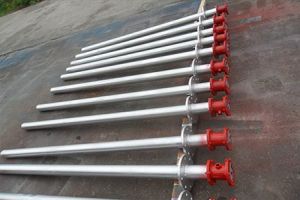
The bolt electric heating rod is a specialized electric heater designed for large bolts (such as turbine and pressure vessel flange bolts). It is inserted into a pre-drilled hole in the center of the bolt to heat it, utilizing the principle of thermal expansion and contraction to elongate the bolt, making it easy to tighten or remove nuts. It is a key tool for solving the difficult problem of assembling and disassembling large fasteners.
Core Working Principle
The working process of the bolt electric heating rod is a typical physical application of "thermal expansion and contraction":
Insertion and Heating: Insert the heating rod into the center hole of the bolt to be operated.
Power On and Temperature Rise: After power is turned on, the resistance wire inside the heating rod generates heat, which is quickly and uniformly transferred to the bolt body through heat conduction.
Bolt Elongation: The bolt expands and elongates axially after being heated, creating a gap between the nut and the flange surface.
Tightening/Removal:
When tightening: While the bolt is elongated, tighten the nut easily by hand or with tools. After power is turned off, the bolt cools and contracts, generating a huge preload force that firmly locks the nut.
When removing: Heating causes the bolt to elongate, and the threaded connection that was originally stuck due to rust or over-tightening becomes loose due to expansion, allowing the nut to be easily unscrewed.
Core Advantages
Compared to traditional flame heating, hammering, or hydraulic stretching, the bolt electric heating rod has significant advantages:
Uniform heating, protecting the bolt: It heats uniformly from the inside of the bolt, avoiding local overheating, material annealing, or deformation caused by flame heating, effectively extending the service life of the bolt.
Precise control, safe and reliable: With a temperature control cabinet, the heating temperature and time can be precisely set, achieving automated control and avoiding overheating or insufficient heating. No open flame operation eliminates the risk of fire and explosion, making it especially suitable for hazardous environments such as chemical and power industries.
Efficient and convenient, saving labor: Fast heating speed, easy tightening or removal process, greatly shortening maintenance time and reducing labor intensity.
Consistent preload force, good sealing: By controlling the heating temperature to indirectly control the elongation of the bolt, the preload force of each bolt is basically consistent, ensuring the sealing reliability of the flange connection.
Main Types and Supporting Equipment
The bolt heating system is usually not a single product but a combination:
Heating rod body: Customized according to the diameter and length of the bolt's center hole. The common structure is a stainless steel tube (such as 1Cr18Ni9Ti) filled with high-resistance alloy wire and magnesium oxide insulating powder.
Power control cabinet: Provides stable and adjustable power for the heating rod.
DC control cabinet: Outputs smooth DC power, effectively reducing the peak voltage borne by the heating rod, significantly extending its service life, and is not affected by grid voltage fluctuations, making it the mainstream choice.
AC control cabinet: Relatively simple structure and lower cost, but has a certain impact on the service life of the heating rod.
Intelligent temperature control system: High-end models are equipped with PID temperature control modules that can set heating curves to achieve precise control of the temperature process, suitable for occasions with extremely high process requirements.
Selection and Usage Points
Key Selection Parameters
Table
Download as Table
Export as Image
Parameter Description Notes
Bolt specification Diameter, total length, and center hole diameter of the bolt to be heated The outer diameter of the heating rod should have a reasonable clearance with the bolt's center hole (usually 0.8-1.3mm) to ensure heat conduction and smooth insertion/removal.
Heating power Calculated based on bolt mass, target temperature, and heating time Power density is the core; ensure uniform heating to avoid local overheating.
Working voltage Rated voltage of the heating rod (e.g., 220V, 110V, etc.) Must match the output voltage of the control cabinet.
Explosion-proof requirements Whether it needs to be used in flammable or explosive environments In chemical, natural gas, and other occasions, heating rods and control cabinets that meet explosion-proof standards must be selected.
Safety Rules for Use
Never insert or remove the heating rod while powered: Always disconnect the power before inserting or removing the heating rod to prevent electric shock and arc injury.
Ensure proper grounding: The control cabinet and heating rod housing must have reliable protective grounding.
Follow the correct operation sequence:
Startup: First turn the voltage regulator/voltage knob to zero → close the power → slowly increase the voltage to the working voltage.
Shutdown: After heating is complete → turn the voltage back to zero → turn off the heating switch → then turn off the main power.
Prevent dry burning: The effective heating section of the heating rod must be fully inserted into the bolt hole. It is strictly forbidden to power it in the air for a long time, as it will burn out quickly.
Regular inspection: Check whether the heating rod leads and plugs are intact, and whether the insulation resistance is qualified. Replace immediately if damaged.